COMMUNICATIONS & RADIO CENTER
GSS Family Communications & Radio Network
GMRS
Primary family two-way recommendation
Licensed family communication; verify equipment and real coverage.
FRS
Affordable entry point
License-free certified handhelds for nearby family communication.
CB
Vehicle supplement
Separate vehicle channel/mode and antenna; not FRS/GMRS compatible.
Amateur / HAM
Advanced education pathway
Individual licensing and privileges; suitable equipment and propagation for longer paths.
Recommended family radio budget
ILLUSTRATIVE PURCHASING PLAN
Estimated total$320-$530
Illustrative equipment allowances-not live quotes. Taxes, shipping, GMRS license fee, subscriptions and installation may be extra; current products can exceed these ranges.
Compare verified radio optionsGSS Family Radio Check
Test physical radios monthly, check batteries, verify saved primary and backup channels, and confirm communication from designated meeting locations. Record actual results, coverage gaps and maintenance.
Open family practice & private planThe app records the test; it does not transmit or control your physical radio. Ordinary shared channels and privacy codes are not secure or confidential.
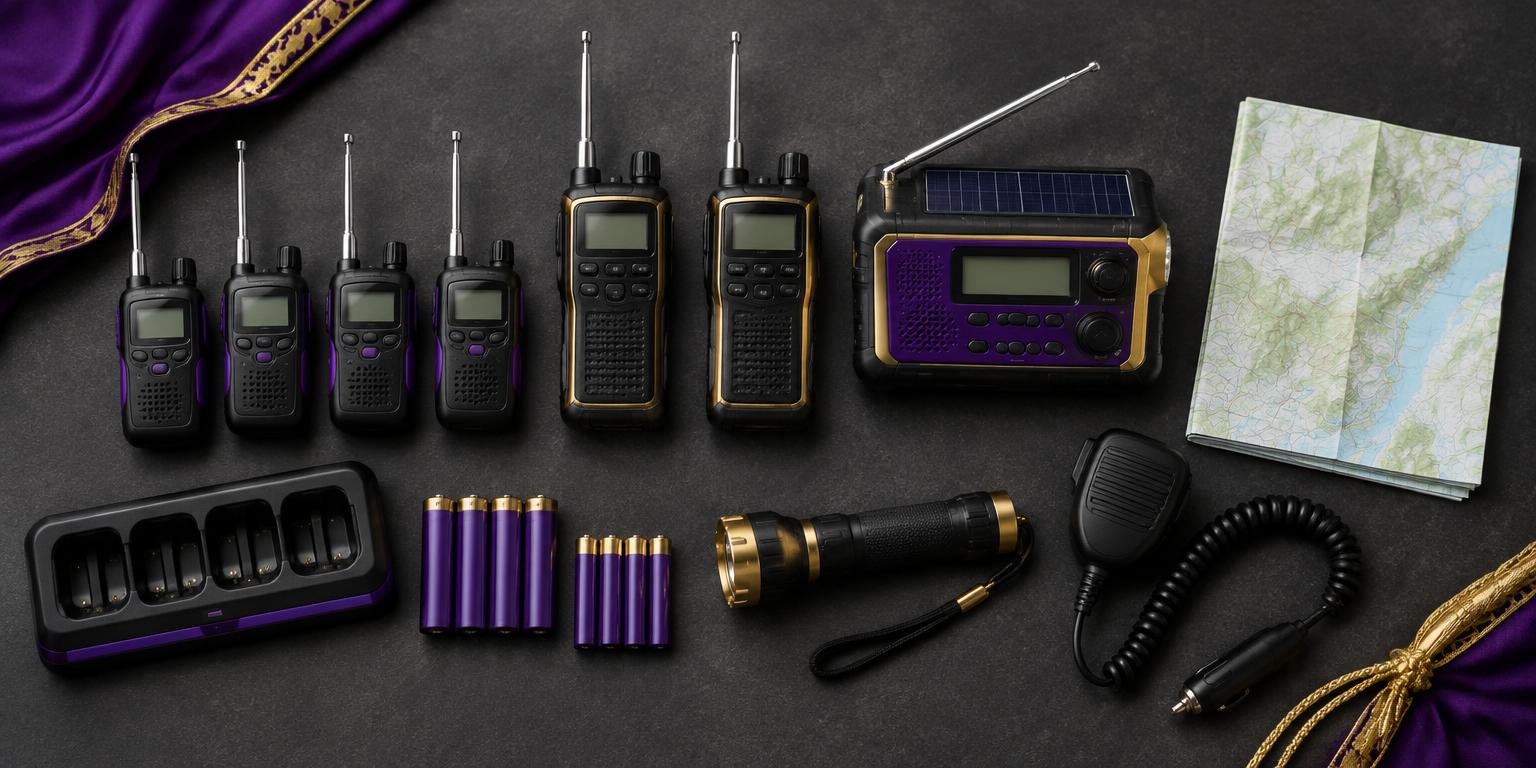
Radio equipment categories
FRS handheld walkie-talkies
Affordable family entry point; nearby direct voice
- Frequency bands
- 462 / 467 MHz
- Licensing
- License-free with FRS-certified US radios
- Setup & antenna
- Use matching simplex channel and tone settings; integral antenna only.
- Power & batteries
- AA or model-specific rechargeable battery; verify charger and battery compatibility.
- Coverage limitations
- Local line-of-sight; buildings/terrain limit coverage. No repeater access.
- Weather resistance
- Check the exact IP/JIS rating, connector seals and accessory limitations; not all radios are waterproof.
GMRS handheld radios
Primary GSS family two-way recommendation
- Frequency bands
- 462 / 467 MHz
- Licensing
- FCC GMRS license
- Setup & antenna
- Select authorized channels, verify family licensing and use FCC call sign; repeater capability varies by model.
- Power & batteries
- Approved rechargeable packs; spare/USB charging depends on exact model.
- Coverage limitations
- Test local coverage; repeater access may extend it but is never guaranteed.
- Weather resistance
- Check the exact IP/JIS rating, connector seals and accessory limitations; not all radios are waterproof.
GMRS vehicle-mounted radios
Vehicle/family links with an external antenna
- Frequency bands
- 462 / 467 MHz
- Licensing
- FCC GMRS license
- Setup & antenna
- Install fused DC power and compatible antenna safely; do not use handheld-only interstitial channels.
- Power & batteries
- Vehicle DC with appropriate fuse and voltage; avoid draining starting battery.
- Coverage limitations
- External antenna height/placement can help; terrain and installation remain limiting.
- Weather resistance
- Check the exact IP/JIS rating, connector seals and accessory limitations; not all radios are waterproof.
GMRS home/base stations
Home check-in point
- Frequency bands
- 462 / 467 MHz
- Licensing
- FCC GMRS license
- Setup & antenna
- Use certified equipment, rated power supply and lawful antenna installation; plan backup power.
- Power & batteries
- Rated DC supply, mains and battery backup as designed.
- Coverage limitations
- Antenna location and terrain dominate; verify bidirectional coverage.
- Weather resistance
- Check the exact IP/JIS rating, connector seals and accessory limitations; not all radios are waterproof.
GMRS repeaters
Optional infrastructure-assisted coverage
- Frequency bands
- 462 MHz output / 467 MHz input
- Licensing
- FCC GMRS license; owner access permission
- Setup & antenna
- Verify owner permission, input/output, tones, equipment compatibility and current availability.
- Power & batteries
- Repeater site power/backup are external dependencies.
- Coverage limitations
- Site/coverage dependent; do not assume availability during outages.
- Weather resistance
- Check the exact IP/JIS rating, connector seals and accessory limitations; not all radios are waterproof.
CB radios
Vehicle supplement; not compatible with FRS/GMRS
- Frequency bands
- 26.965-27.405 MHz
- Licensing
- License by rule; certified US CB equipment
- Setup & antenna
- Match channel and modulation; properly install/tune antenna before transmitting. No amplifiers.
- Power & batteries
- Typically vehicle DC; handheld/base options vary.
- Coverage limitations
- Antenna/conditions dependent; no promised mileage.
- Weather resistance
- Check the exact IP/JIS rating, connector seals and accessory limitations; not all radios are waterproof.
MURS radios
Alternative local VHF direct communication
- Frequency bands
- 151.820-154.600 MHz (five channels)
- Licensing
- License by rule; compliant MURS equipment
- Setup & antenna
- Use compatible MURS equipment and channel; obey 2 W output and antenna-height rules.
- Power & batteries
- Model-specific batteries/chargers.
- Coverage limitations
- Local simplex; no repeaters; buildings/terrain affect signals.
- Weather resistance
- Check the exact IP/JIS rating, connector seals and accessory limitations; not all radios are waterproof.
Amateur / HAM radios
Advanced long-distance education pathway and trained volunteer networks
- Frequency bands
- HF / VHF / UHF by licensed privileges
- Licensing
- Individual FCC amateur license and exam
- Setup & antenna
- Learn band plans, operating modes and license privileges; every transmitting family member needs authorization.
- Power & batteries
- Battery/DC/mains options; HF setup requires suitable antenna and more planning.
- Coverage limitations
- Local to long-distance when propagation/equipment/privileges permit; not guaranteed.
- Weather resistance
- Check the exact IP/JIS rating, connector seals and accessory limitations; not all radios are waterproof.
NOAA weather receivers
Official weather broadcasts independent of internet
- Frequency bands
- 162.400-162.550 MHz (seven NWR channels)
- Licensing
- No receiving license
- Setup & antenna
- Tune the strongest local station and test alert functions; SAME capability varies.
- Power & batteries
- Battery/mains/crank/solar depending on model.
- Coverage limitations
- Dependent on transmitter operation, terrain and reception; not a two-way radio.
- Weather resistance
- Check the exact IP/JIS rating, connector seals and accessory limitations; not all radios are waterproof.
Satellite messengers
Remote check-ins / SOS
- Frequency bands
- Provider-specific satellite networks
- Licensing
- Usually provider subscription; check device/region rules
- Setup & antenna
- Activate account and service, test with provider guidance, ensure sky view.
- Power & batteries
- Rechargeable battery; approved cables/chargers.
- Coverage limitations
- Requires functioning satellites/provider and usable sky view; not infrastructure-free.
- Weather resistance
- Check the exact IP/JIS rating, connector seals and accessory limitations; not all radios are waterproof.
Emergency shortwave receivers
Additional distant news sources; verify reliability
- Frequency bands
- HF broadcasts; receiver coverage varies
- Licensing
- No US receiving license for ordinary broadcasts
- Setup & antenna
- Connect suitable receive antenna and tune broadcast schedule; verify source information.
- Power & batteries
- Battery/USB/mains by model.
- Coverage limitations
- Propagation/time dependent; reception is not a transmit capability.
- Weather resistance
- Check the exact IP/JIS rating, connector seals and accessory limitations; not all radios are waterproof.
Radio antennas and accessories
Safe, compatible antenna installation
- Frequency bands
- Must match radio/service
- Licensing
- Service rules apply
- Setup & antenna
- Match connectors, band, impedance and allowed antenna type. Keep clear of power lines.
- Power & batteries
- Passive antennas; accessories vary.
- Coverage limitations
- Correct antenna placement may help; cannot overcome every obstruction.
- Weather resistance
- Check the exact IP/JIS rating, connector seals and accessory limitations; not all radios are waterproof.
Battery and solar charging systems
Sustain physical equipment during outages
- Frequency bands
- Not applicable
- Licensing
- No radio license for chargers
- Setup & antenna
- Use approved battery chemistry, voltage, polarity and cables. Solar output varies.
- Power & batteries
- Mains/vehicle/solar; size using actual loads.
- Coverage limitations
- Runtime depends on energy, load and temperature-not advertised capacity alone.
- Weather resistance
- Check the exact IP/JIS rating, connector seals and accessory limitations; not all radios are waterproof.
Headsets, microphones and speaker microphones
Hands-free listening and accessible communication
- Frequency bands
- Must match radio connection
- Licensing
- Underlying service rules apply
- Setup & antenna
- Verify pinout/PTT/VOX support and water seals. Use safe volume; do not distract drivers.
- Power & batteries
- Usually radio-powered; model dependent.
- Coverage limitations
- Does not improve radio coverage; attached accessories may change weather resistance.
- Weather resistance
- Check the exact IP/JIS rating, connector seals and accessory limitations; not all radios are waterproof.
What works when normal networks fail?
- Direct FRS, GMRS simplex, CB and MURS voice need compatible working radios, lawful operation, batteries and usable coverage-not internet or cellular data.
- Wi-Fi/internet or cellular data failure does not necessarily mean cellular voice/SMS has failed. Try emergency calling when available; texts may get through congestion but still need cellular service.
- Repeaters need site power and operating infrastructure. Internet-linked amateur modes need their relevant links; do not assume offline operation.
- NOAA and AM/FM receivers need operating broadcast transmitters and reception; they cannot transmit a distress call.
- Satellite messengers need charged equipment, usable sky view, operating provider networks and typically subscriptions.
- This PWA can show previously saved plans offline after installation on the published app, but cannot create radio signals or send disconnected-network messages. Print the plan before an outage.
| DEVICE | LICENSE | POWER | TYPICAL RANGE | BEST FOR |
|---|---|---|---|---|
NOAA Weather Radio Receives official National Weather Service broadcasts and alerts 24/7, including when internet and cell service are down. Official info | None. | Battery, AC, hand-crank or solar models. | Depends on nearest NWR transmitter. | Official weather and hazard alerts at home. |
AM/FM battery or hand-crank radio Local broadcast stations carry emergency information during outages. Official info | None. | Batteries, crank, solar. | Broadcast coverage area. | Local news and official announcements. |
FRS radios Short-range two-way radios for family members close by. Official info | None in the U.S. | AA/rechargeable. | Typically under a mile in neighborhoods; varies with terrain. | Talking across a property or neighborhood. |
GMRS radios Primary family recommendation; authorized equipment may support repeaters. Check exact model. Official info | FCC GMRS license required (qualifying immediate family; no exam). | Rechargeable/vehicle. | Actual local coverage varies; verify repeater access and operation. | Planned family two-way communication with field-tested coverage. |
CB vehicle radios Vehicle supplement on separate CB frequencies, not compatible with FRS/GMRS. Official info | License by rule; FCC-certified US CB equipment. | Vehicle DC / appropriate supply. | Antenna, mode, terrain and conditions dependent. | Vehicle travel with compatible CB-equipped users. |
Amateur (ham) radio Wide range of bands for local to worldwide communication; active emergency volunteer networks. Official info | FCC amateur license and exam required. | Battery, vehicle, solar. | Local to global. | Long-range, community emergency nets. |
Satellite messenger / SOS device Sends texts or SOS via satellite where there is no cell service. Official info | None; usually needs a subscription. | Rechargeable. | Wherever the sky is visible. | Travel, remote areas, check-ins when networks fail. |
Power banks & solar chargers Keep phones and radios charged during outages. Official info | None. | Recharge from wall, vehicle or sun. | - | Extending device runtime. |
FAMILY COMMUNICATION PLAN
- Choose one out-of-area contact everyone checks in with, long-distance calls/texts often work when local lines are jammed.
- Agree on check-in times (for example 8am and 8pm) and which radio channel to use.
- Text instead of calling during emergencies, texts use less network capacity.
- Print a contact directory for every family member, go-bag and vehicle.
- Know your primary and alternate meeting points.
- Download offline maps in your maps app before you need them.
- Test radios monthly: check batteries, saved channels and communication from designated meeting locations; record actual results in Family Radio Check. Replace batteries per the manufacturer and condition, not an assumed schedule.
No advertised range is guaranteed. Licensing rules are set by the FCC, check the official pages above.
GSS FAMILY COMMUNICATIONS · WHEN NORMAL NETWORKS FAIL, PREPARE AN ALTERNATIVE.